
What Is Mattress Product Development?
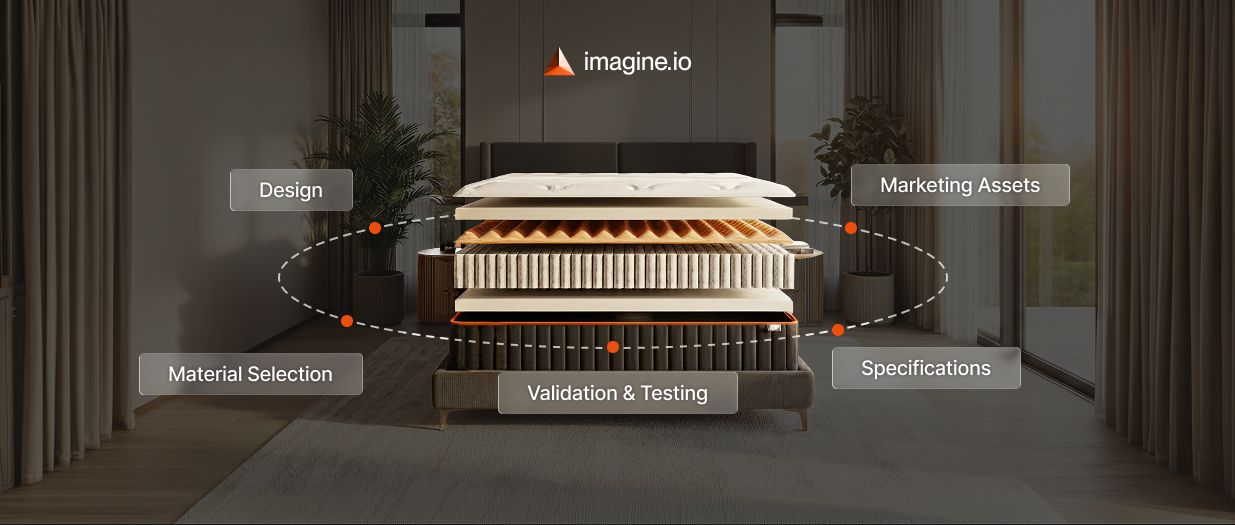
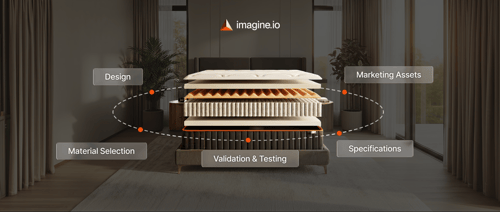
Mattress product development is the process of turning an idea into a market-ready product. It includes design, material selection, validation, specification generation, and marketing asset creation.
A successful mattress must balance comfort, support, durability, production efficiency, and customer expectations. As product lines grow, that balance becomes harder to manage manually.
Digital workflows help teams manage that complexity with more clarity and consistency.
Stage 1: Design and Concept Development
Every mattress starts with a concept. Product teams explore support systems, comfort layers, fabric options, quilting patterns, dimensions, and overall product positioning.
Using a digital model allows teams to visualize mattress designs before physical samples are made. Layer structures, materials, and styling details can be reviewed early in a realistic digital environment.
This helps designers, engineers, merchandisers, and leadership teams align faster.
Digital design can support:
- Faster concept exploration
- Rapid design iterations
- Reduced physical prototyping
- Better stakeholder feedback
- Earlier issue identification
For mattress teams, this means fewer manual revisions and a clearer path from concept to approval.
Stage 2: Material Selection and Evaluation
Material selection directly affects performance and customer experience.
Teams often evaluate:
- Foam types and densities
- Coil and spring systems
- Comfort layers
- Transition layers
- Cover fabrics
- Cooling materials
- Sustainable material options
Each material decision affects comfort, durability, cost, production, and product positioning.
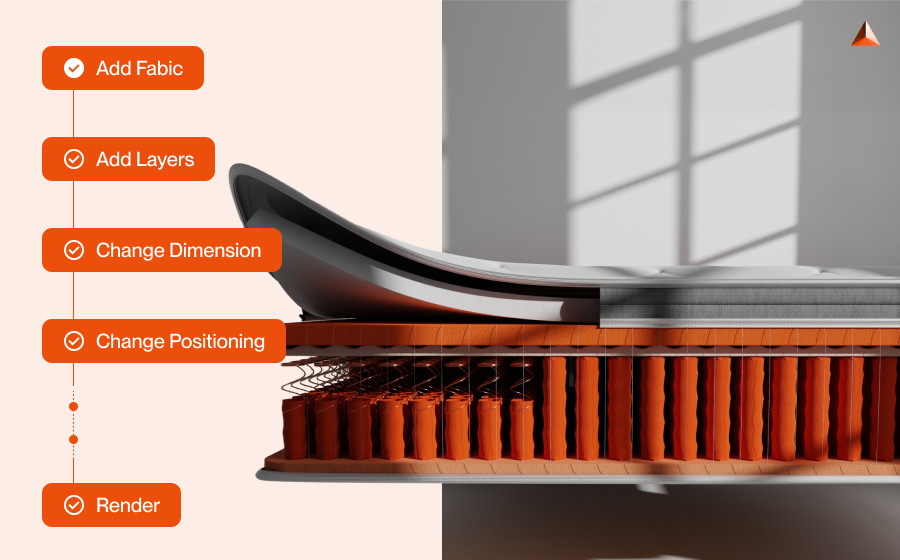
A centralized digital model makes these choices easier to compare. Teams can visualize different combinations while keeping material details connected to the product record.
This is especially useful for configurable mattresses. Foam densities, support systems, fabric options, dimensions, and comfort levels can all live inside the same digital environment. Instead of rebuilding product data for every variation, teams can manage options from one connected model.
Stage 3: Validation and Product Testing
Before production begins, mattresses must be validated for quality and performance.
Validation may include:
- Comfort testing
- Durability testing
- Compression testing
- Edge support evaluation
- Compliance review
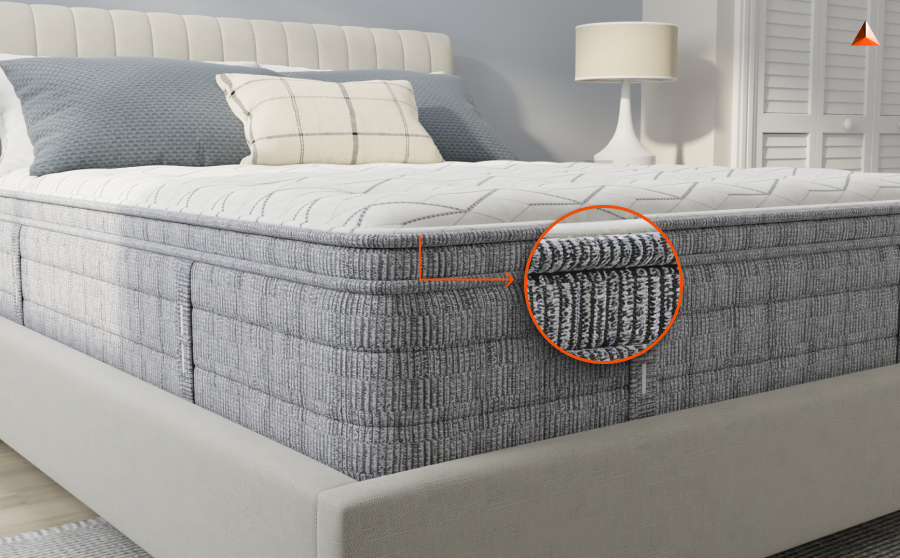
As testing progresses, designs often change. Without a connected workflow, teams can lose track of which version was tested, approved, or revised.
When validation is tied to a digital product model, teams can connect test results, design changes, and approval milestones to the same product record. This creates a clearer audit trail and reduces confusion between departments.
Stage 4: Specification Generation
Once a product is approved, teams need accurate manufacturing specifications.
These may include:
- Product dimensions
- Layer construction details
- Material requirements
- Assembly instructions
- Manufacturing standards
Small errors in specifications can create production delays, rework, or inconsistent finished products.
When specifications are generated from a centralized digital model, product data stays synchronized. Design details, material selections, and construction information remain tied to the approved product version.
This helps manufacturing teams and partners work from the same source of truth.
Stage 5: Marketing Asset Creation
The final stage of mattress product development is preparing the product for market.
Marketing and ecommerce teams need:
- Product images
- Layer breakdown visuals
- Lifestyle renders
- Ecommerce content
- Sales materials
- Interactive product experiences
Traditional content creation often depends on physical samples and photography. That can delay launches, especially when product details change late in development.
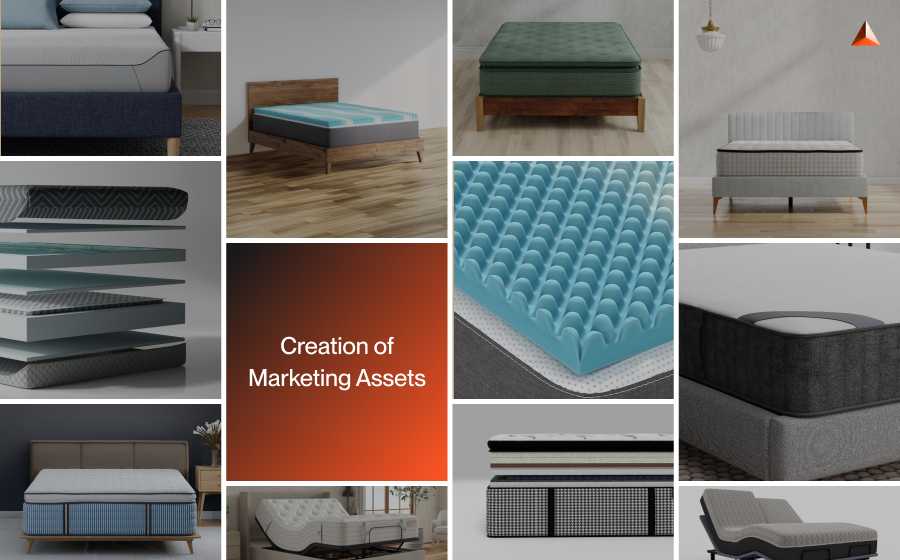
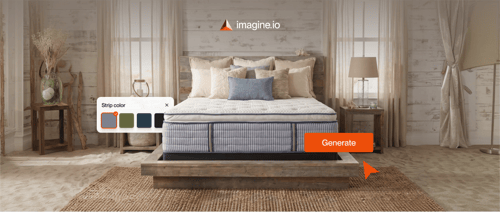
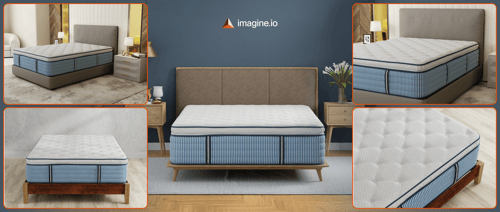
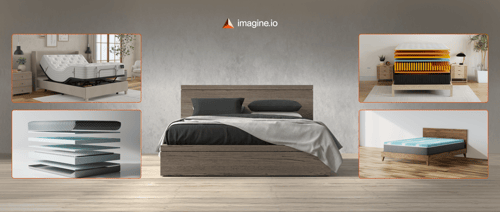
A digital product model allows teams to create marketing assets earlier. The same model used for design and specifications can generate photorealistic renders, exploded mattress views, ecommerce visuals, and interactive product configurator experiences.
Imagine.io’s 3D mattress design and visualization solutions are built for this kind of workflow. Teams can create product visuals, support customization, and prepare digital assets without waiting for every physical sample.
How One Digital Model Supports the Entire Workflow
The biggest advantage of a digital workflow is continuity.
Instead of creating separate files for design, engineering, manufacturing, sales, and marketing, one digital model supports the full mattress product development lifecycle.
|
Development Stage |
Role of the Digital Model |
|
Design |
Visualizes concepts and configurations |
|
Material Selection |
Compares layers, fabrics, and construction options |
|
Validation |
Tracks revisions and testing outcomes |
|
Specification Generation |
Supports accurate manufacturing documentation |
|
Marketing Assets |
Creates renders, visuals, and product experiences |
This creates a connected digital thread across the product lifecycle. The National Institute of Standards and Technology describes the digital thread as a connected flow of product information that supports traceability and decision-making.
For mattress manufacturers, this means one model can support layer design, material selection, product validation, specifications, sales presentations, and ecommerce content.
Imagine.io’s Mattress Builder supports this process by helping teams build, configure, visualize, and market mattress products from one digital foundation. Product teams can manage construction details. Sales teams can show product options more clearly. Marketing teams can create high-quality 3D product visuals from the same product model.
The result is fewer handoffs, fewer inconsistencies, and a more efficient path from concept to launch.
Conclusion
As mattress products become more complex, development workflows need to become more connected.
A digital workflow helps streamline every stage of mattress product development, from design and material selection to validation, specification generation, and marketing asset creation.
By building the process around a single digital model, brands can improve collaboration, reduce manual work, create more consistent product information, and prepare marketing assets earlier in the process.
For organizations exploring ways to modernize mattress product development, the next step is seeing how this workflow could work in practice. Book a personalized demo with Imagine.io to see how one connected digital model can support design, validation, specifications, and marketing from start to finish.
.gif?width=1296&height=1296&name=Untitled%20design%20(8).gif)
Activate Your Free Trial




.png?width=500&name=How%20to%20Add%20a%203D%20Product%20Configurator%20to%20Your%20WordPress%20Website%20(Complete%20B2B%20Guide).png)












%20(1).png?width=500&name=Why%20Exploded%20Mattress%20Views%20Matter%20(And%20How%20to%20Generate%20Them)%20(1).png)
.png?width=500&name=Best%20Shopify%20Product%20Configurator_%20How%20to%20Choose%20the%20Right%20One%20(2).png)
.png?width=500&name=Why%20Exploded%20Mattress%20Views%20Matter%20(And%20How%20to%20Generate%20Them).png)


.png?width=500&name=Best%20Shopify%20Product%20Configurator_%20How%20to%20Choose%20the%20Right%20One%20(1).png)




.png?width=500&name=How%203D%20Rendering%20Can%20Make%20or%20Break%20Your%20Industrial%20Design%20Pitch%20(1).png)




%20with%20Digital%20Twins%20and%203D%20Visualization.png?width=500&name=Optimizing%20Your%20Digital%20Asset%20Management%20(DAM)%20with%20Digital%20Twins%20and%203D%20Visualization.png)